



It’s October! HOORAY!
The big news this month of course is that for all PG&E electric customers, summer rates have ended! (..and the crowd goes wild…) Enjoy your pumpkin spice rates.
This is a reminder that PG&E breaks the calendar year down into two “seasons.”
There is the “summer” season, which is four months long and runs from June through the end of September, and which we just exited.
And then there is the “winter” season that encompasses all the other remaining 8 months of the year, starting in October and ending after May.
The biggest difference between the two seasons is the price of peak vs off-peak electricity. For most of us, we are PG&E customers and so we are on the default residential Time-of-Use (TOU) electricity rates. (Businesses also have TOU rates.)
The most common TOU rate plan is called E-TOU-C where peak hours are from 4-9pm every day of the year, no exceptions. A less common rate plan is called E-TOU-D, with peak hours only occurring from 5-8pm, Monday through Friday, and holidays are considered off-peak all day.
Even more rare are the homes still on the old E-1 rates, which don’t have peak and off-peak prices. Some of you are on the cool new rate plan called EV2, which applies to anyone with an EV or a home battery (wink, nudge). It offers special low discounted pricing from midnight until 3pm every day of the year.
If you want to explore whether switching rate plans would save you money, you can go to your online PG&E dashboard (wait…you don’t have one yet?!) and it will quickly tell you what the annual cost difference would be between your rate options.
You can also call PG&E and ask a human to run the comparison. And yes, you can trust these analysis results. They simply take your last 12 months of usage and plop it into the different formulas for each of the rates. Call the PG&E Solar Hotline at 877-743-4112, and put that number in your phone contacts.
If you want to check out PG&E’s rate plans, go here. It’s alphabetized, so make sure to scroll down to the E’s where all the residential rate plans live. Note: They refer to them as rate schedules. Tomato, tomahto.
So the good news is now the evening peak hours for PG&E’s electric customers won’t cost as much for the next eight months. From Oct-May, the price difference between peak and off-peak is more like 3c/kWh. During the summer that jumps to more like 13c/kWh, depending on the rate plan. Or rate schedule…sorry.
The take-away? Still conserve power in the evenings after sundown, when the roughly 50 BILLION WATTS OF SOLAR across CA shuts down for the night. But don’t freak out so hard, especially as the longer nights arrive and we have lights on more.
CA does have 21 billion watts of batteries online as well, so our statewide grid runs off stored solar until about midnight.

This month we are highlighting the possible benefits of what are called smart circuits and smart panels.
These are the new electrical breaker boxes and electrical breaker switches that are connected to the Internet, so that you can not only monitor your energy usage per circuit, but you can also turn circuits off and on with a tap of a finger on your phone screen.
What we’re discovering is that a lot of people with backup batteries, which are wired to power their whole home, can also have extraneous things running during an average day that they may not need to run during an outage.
Things like hot tubs, swimming pool circulation pumps, waterfalls and any other water features on the property, or simply any large power use items that you don’t want running during an outage.
For one local couple with grown kids, they have an early adopter solar system from us, and have already been through one devastating fire west of Nevada City atop a river canyon. So they recently added a back up battery to their system, for future fires and power shutdowns and evacuations.
Well, it got its first test, unfortunately. This summer, during our county fair season, there was another fire on their road, and while the battery kicked in, it didn’t last as long as they hoped. (The fire was quickly put out and they are safe.)
This is because like many Nevada County properties, there are multiple uses of power happening on a summer afternoon, stacked on top of each other, from watering food gardens to defensible space irrigation to fridges and freezers and a shop building, plus a home-based business as well as an ADU.
A common solution to this issue is to add what is called an emergency loads panel, or critical loads panel, to your home’s wiring and circuitry.
That’s where you decide which circuits you would like to keep powered in the event of an outage, while all the rest of the property’s power gets shut down.
For some properties, this can be relatively simple and cost-effective. But for others, like the family I described here, they have panels and wiring all over the property going to several different buildings. It can be complicated and expensive.
So the next best thing is to consider installing a smart panel or smart circuits.
A smart panel is an entire electrical breaker panel that can also talk to the internet, so you can monitor your usage on the entire panel circuit by circuit, and can also turn circuits off.
An even newer thing is to keep your old electrical breaker panel, but install - one by one - new individual smart circuit breakers.
These are simply small breakers that we’re all used to, with a switch that you can flip on and off. However, they also have a tiny device that connects to the Internet, so that you can monitor it on your phone via an app and then turn it off and on as needed with the touch of a finger.
Are you away from home and the power has gone out, but you’d like to shut down everything on your property to save the battery power? Then doing that remotely via a smart panel or smart circuit may be your solution.
Call us for more details.

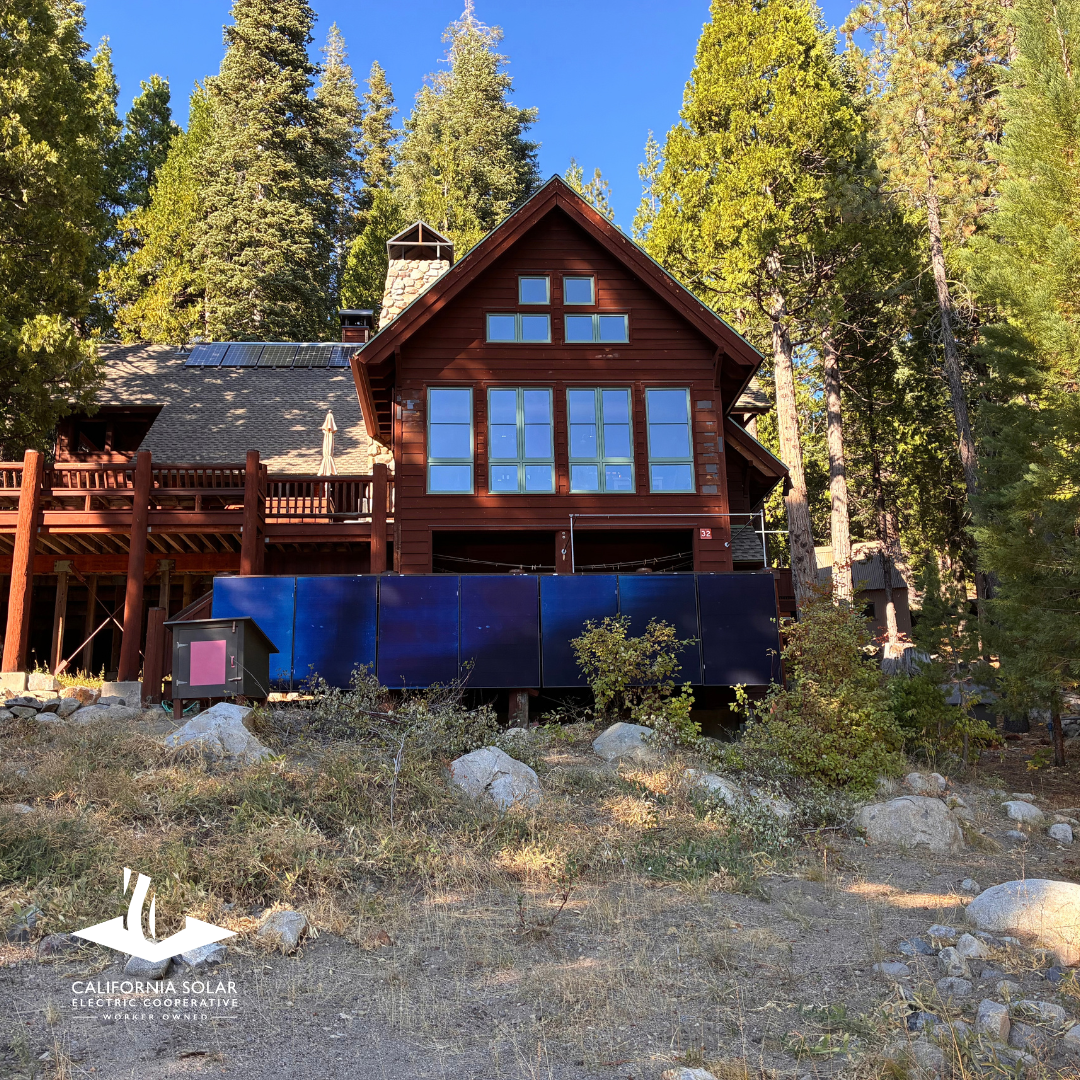
For October, we’re highlighting our special “Adopt an Orphaned System” program.
This is where we adopt an orphaned system, either left behind by an out of town company who has zero interest in follow-up care, or it was a system installed by a competing company that is no longer with us (RIP).
Sadly, over our 25-plus years of community work we have seen numerous solar companies go under for a variety of reasons. Some were too small. Some were too big. Some were busy doing other things they liked better. Some simply cut too many corners or had fast profits on the mind of the owner.
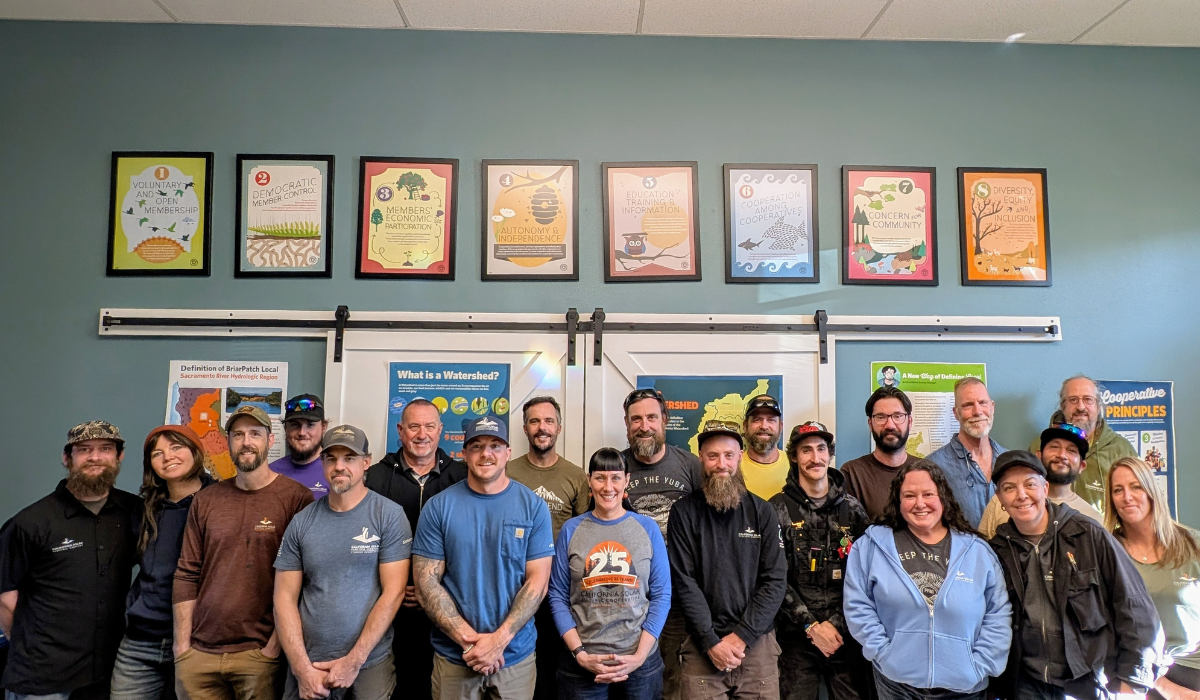
We are a worker-owned solar and energy cooperative, unique in this world. It has kept us stable and safe for the long term, which benefits us, our customers, the community, and the whole world. And as the systems get orphaned around us year after year, we are here to gather them under our capable wings.
We just added our FOURTH technician in the service dept, along with Joslyn (profiled in our August newsletter), which means we can arrive quickly and take care of your needs, especially if they are urgent. All other solar companies have to slow down their installs and pull someone off a roof to deal with any service calls. We know. We used to be like that, too.
But with the loss of two of our most beloved longtime local solar companies in the past year, along with a couple more in Placer and El Dorado County, we are left with more local orphaned systems than ever. We now take care of thousands of solar systems across the Sierra Nevada foothills and greater Sacramento Valley region.
That’s why we’ve created a special program, where we take on someone else’s install as our own, much like someone with a sports car may need to find a new trusted mechanic. We will perform a site visit and do a full inspection from top to bottom, along with analyzing output and providing all the feedback needed to either feel good knowing your system is fine, or take away a list of options to consider, moving forward.
This onboarding service of adopting orphaned systems has a very reasonable one-time cost of $350, to make it easy to jump into our arms. If you know someone who could benefit from our expertise and care and attention to detail, please give them our number! 530-274-3671
Also see our webpage dedicated to service calls.
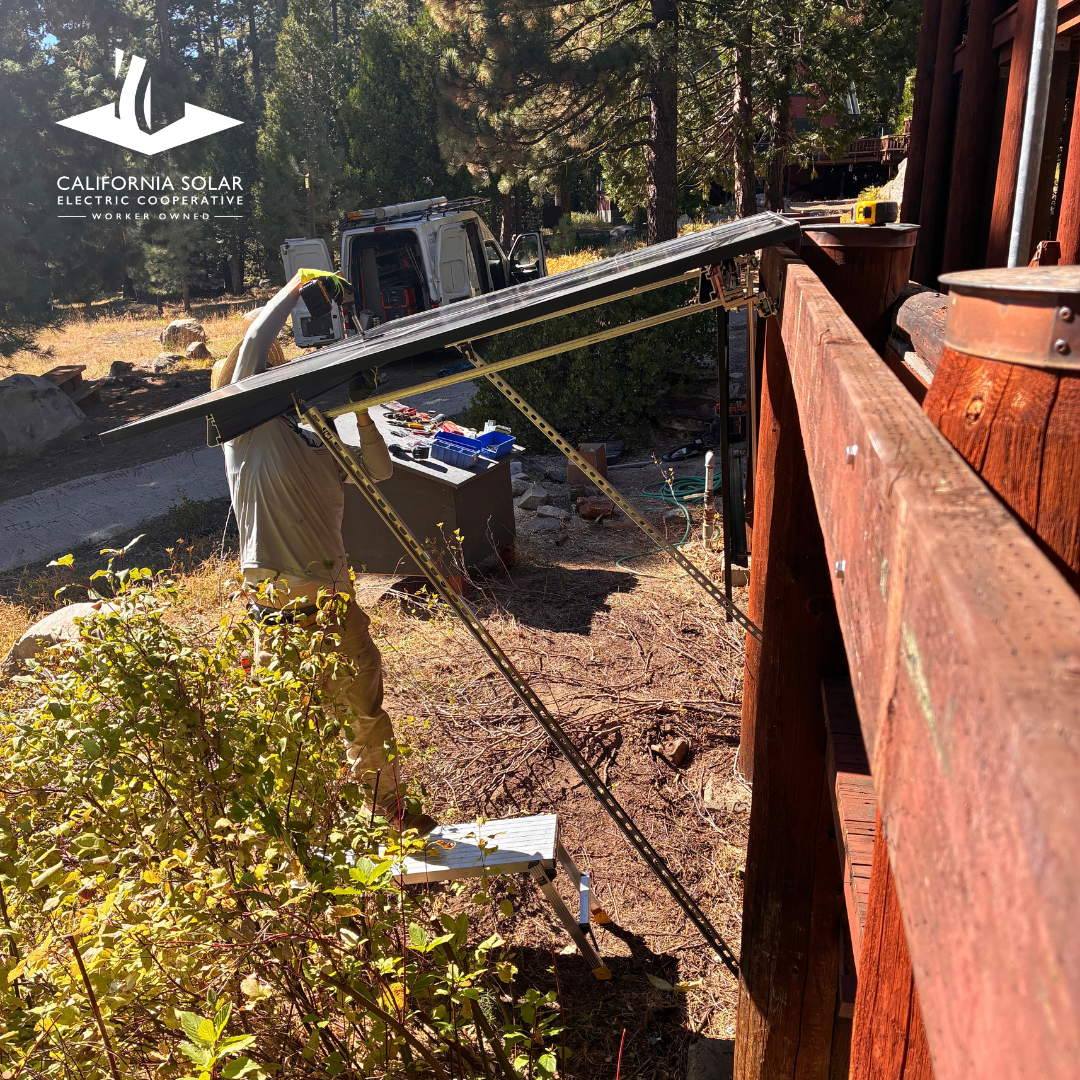

Okay, it’s update time on the two extremely urgent, time-sensitive utility rebates worth highlighting for homeowners in PG&E territory. One rebate worth thousands of dollars is for buying a used Electric Vehicle (EV) and/or installing an EV fast charger at home. The other rebate is $7,500 for adding a battery to your home, with or without solar.

EV & CHARGER REBATES
PG&E offers either a $1,000 rebate or a $4,000 rebate for purchasing a used EV. If you qualify for the low income rebate, they will send you a $4,000 check after proof of purchase, while the standard rebate is $1,000. Please note: PG&E just announced the standard EV rebate will end at the end of this month! A complete application must be submitted by 11/11/26 to qualify for the standard rebate.
*** The state of California just announced a new separate EV rebate program of $3,500 for a new EV and $1,750 for a used one, taken off the price of the car at any of the participating manufacturers’ dealer lots, not available for private car dealerships or personal transactions. For more information, go here ***
PG&E also offers a $1,000-$5,000 rebate for installing a fast charger at home. If you qualify for the low income program, they will cover up to $2,000 for the fast charger and you must use a local contractor on their approved list, but you don’t have to pay for the install at all. It’s 100% covered upfront, and if there are electrical service panel upgrades needed, they will cover up to a grand total of $5,000 for the charger and upgrades. The standard rebate is $1,000 and those homeowners are free to hire whoever they want, with the rebate coming as a check afterwards.
Note: We are experienced in installing fast chargers, should you be looking to add one to your home.
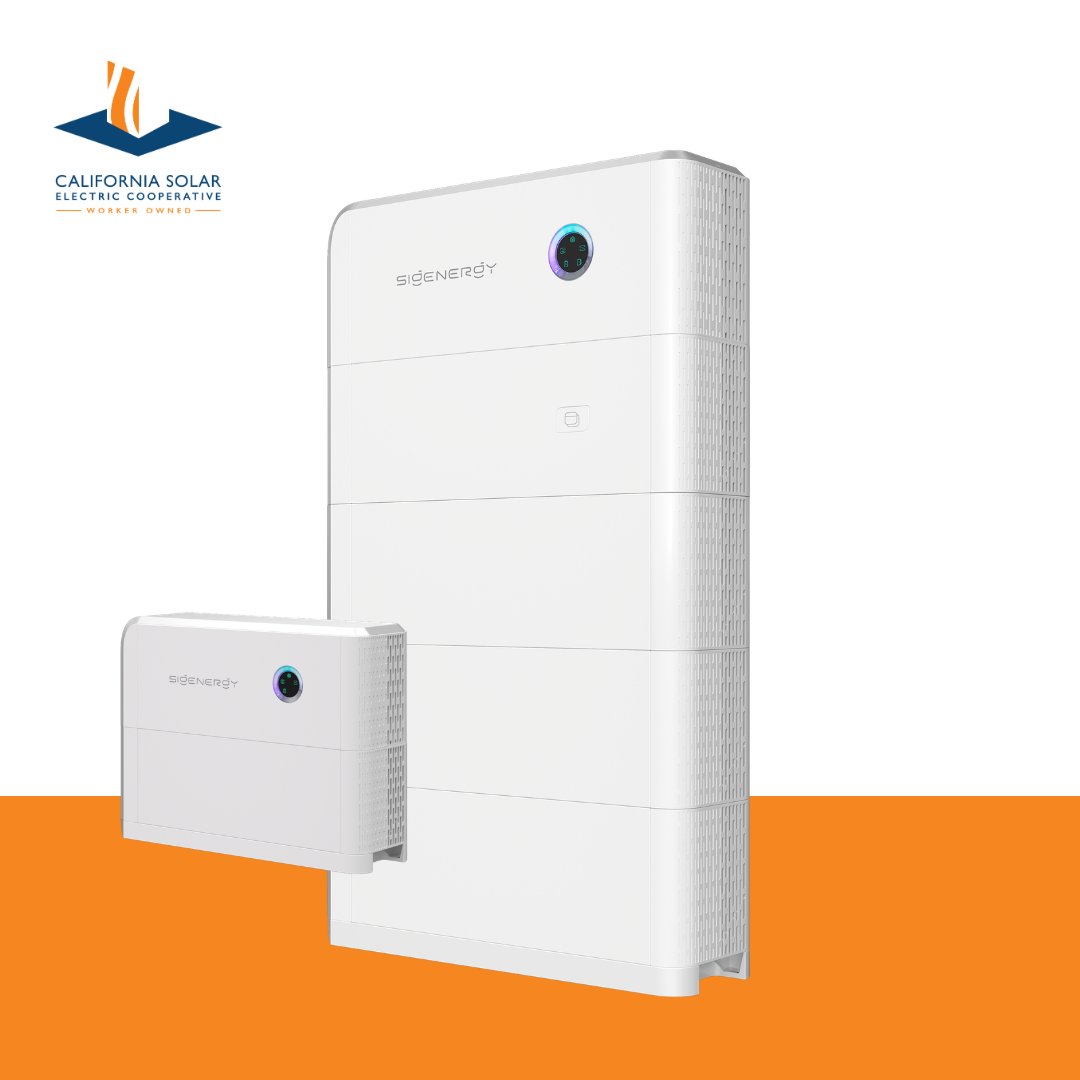
HOME BATTERY STORAGE REBATES
There is still the PG&E’s annual “Permanent Battery Storage Rebate” program that gives homeowners a $7,500 check for installing their first backup battery. There are only 600 rebates given out per year, first come first served, and as of September 25th there were only 165 remaining according to the program website, on pace to run out by early December, if not sooner.
To qualify, your address must have had at least 5 or more of a very specific type of power outage in the past two years. These are short outages where there is no clear cause, so PG&E assesses it as being due to their extra sensitive power line settings that are now in place to prevent fires.
IMPORTANT NOTE: Now that we are already booking installs in December, we cannot guarantee that a battery installation will be done before the 2026 rebates run out. All risk is assumed by the homeowner. New rebates are expected in 2027, however homes that qualified in 2026 may not qualify in 2027.
Note: This incentive applies only to the first battery installed at a home. For customers with qualifying medical needs or those who meet low-income eligibility requirements, PG&E offers additional programs that may cover the cost of the first battery entirely. Click below for more info.

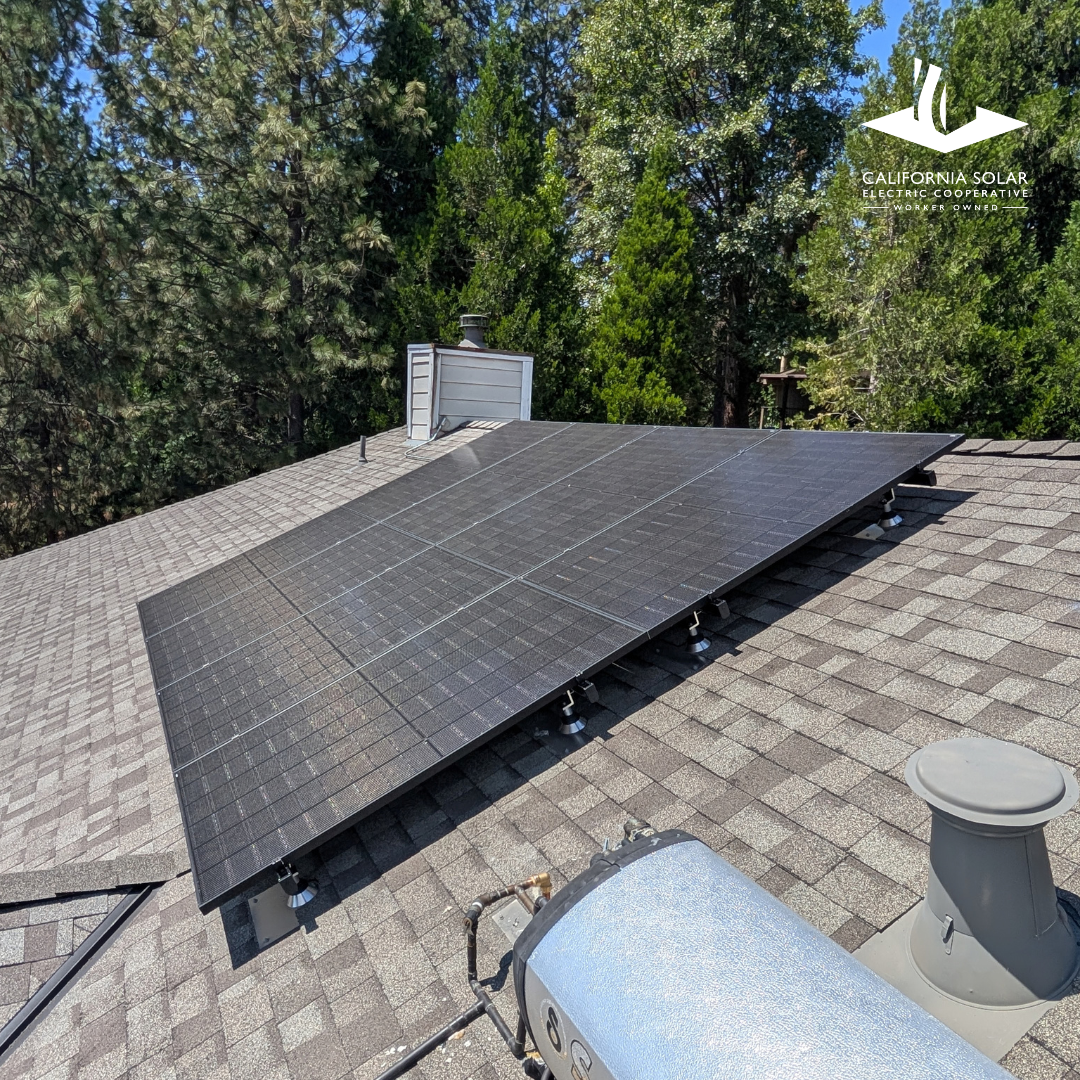
This month we’d like to shine a sunbeam on a story that is becoming more and more common: an early adopter of solar who decided to replace the 20-year old solar panels and inverter with a brand new system and backup battery, as they jump into the new “NEM3” statewide solar rules that have been in place since 2023.
Martin R. lives in Grass Valley and he and his wife installed a 2.4kW roof-mounted system twenty years ago with a solar contractor from out of town that appears to be out of business now. After 20 years, the PG&E interconnection agreement ends for early adopters and they are moved onto the new NEM3 rules, leaving behind the old NEM1 arrangement that valued solar credits differently. (Note: Currently, under state law all utility interconnection agreements for solar last 20 years.)
This spring, when Martin popped in for a chat and we talked about his options. With a reroof needed and their 20-yr PG&E agreement ending, he felt it was time to look at removing and replacing the panels.
With a re-roof and new solar system in his plans, Martin was delighted to discover that their address qualifies for the special one-time $7,500 rebate from PG&E for installing their first home battery. This helped cover the costs of the upgrade and allowed them to add not only more solar than they had before, but to also include a new Tesla Powerwall 3 battery so that their daytime solar energy stays on-site at the home and runs things after dark when peak utility rates kick in.
Furthermore, to demonstrate the gains in solar panel efficiency across the last two decades, their home went from being powered by 12 solar panels rated 200W each, to now running off of only 8 solar panels rated 440W each…double the output per panel! They effectively increased their power output by 50% while at the same time reducing the number of panels on the roof by a third. That means less electrical connections, which means more reliability and more room to expand in the future.
As if all of that wasn’t enough…new system, larger output, fewer panels, added battery, $7,500 from PG&E to help, new roof…they also took advantage of our special financing partner HDM to get a discount off the price, by leveraging the commercial federal tax credit for solar in a unique way.
Even though the 30% residential solar tax credit ended last year, the commercial tax credit remains in place through 2027.
This means third party investor-based solar system owners can own the system for 6 years, capture the tax credit, and pass some of the savings on to you in the form of a lower price. Then after 6 years, they turn ownership of the system over to the homeowner, having captured their tax credit and satisfied the IRS requirements of 6 years of ownership.
It’s a win-win proposition and it saved Martin and his wife almost $8,000. And that’s on top of the $7,500 check from PG&E. If you’d like to know more about the HDM financing offer or the PG&E battery rebate program, please reach out to us.


For our October newsletter, we decided to make it a Martin-focused affair, by having both our Customer Spotlight and Employee Spotlight highlight someone named Martin.
If you’ve had us install panels, batteries, and/or a generator in the last year, chances are you’ve met our in-house Energy Advisor Martin Webb. He’s in charge of performing walk-throughs for every customer after the job is done and everything is up and running, making sure that the appropriate apps are downloaded, the system settings are good for the situation, and all questions are answered and feedback is taken.
A long time industry veteran who has worked with California Solar Electric off and on for over 20 years, he used to run our Commercial Division until the Covid shutdown closed almost all local businesses and we scaled back that work. For the past few years he was semi-retired from solar, working at the local radio station KVMR and as a caregiver for an elderly couple, while being an independent consultant and voice for the community when it comes to energy choices.
When we here at the co-op decided that we needed a new position to serve the needs of our diverse client base stretching back over 25 years, someone who can understand and explain all the details for folks - whether they’re on NEM1, NEM2, NEM3, or commercial or residential, or off-grid or on-grid - we knew Martin was the person. With the first walk-throughs starting last December, he has now sat for over 100 appointments, saying that he has learned as much over the past year as he did in the previous three decades.
According to Martin, “For me, learning all the ins and outs of battery power and functionality has been eye opening and fun, since batteries weren’t part of the solar landscape five years ago.” He has become an enthusiastic cheerleader for adding batteries to homes, with or without solar, and looks forward to every visit and chat.
Before getting into solar in Nevada County in 1998 (starting as a phone answerer and shipper/receiver for the only solar company around at the time), Martin grew up on the east coast in the Washington, D.C. area, living a life of care and concern for the environment, but never imagining putting that to work in a career. Mostly working in the food industry as a cook, baker, and deli manager, he also spent two years as a DC taxi driver, adding “there are some interesting stories I can share from that time of my life!”
After moving to Nevada County in the late 90s at the urging of a high school friend, he feels like this is home, having lived the entire second half of his life here. When asked about his love for Nevada County rural living, he said “My roots are here now, both my kids went to high school here, and I can’t imagine living anywhere else.”
Twice a month Martin also broadcasts on KVMR FM, where he has a long-running show called “People, Planet, Progress” on the first and third Tuesday of each month from 6:30-7pm.
We’re grateful to have Martin back on staff and look forward to how his new role can help all of us reach the stars with our solar and energy goals!


A question we hear a lot is: why is PG&E making all these changes to harm solar, from moving peak hours to the evening, to reducing the value of solar credits, to kicking people off the old NEM 1 & 2 solar rules?
The answer is simple. They aren’t making changes to kill solar. These changes are often the result of logical calculated decisions over time, usually made by state officials and regulators who are trying to balance the grid and assure everything operates smoothly in a changing environment.
Yes, PG&E has done some horrible things. They are convicted felons. They have killed dozens and dozens of their customers through negligence and neglect. They have razed entire communities due to fires started by their equipment. AND…they are also making major changes to turn all of that around, faced with bankruptcy and a possible splitting up by the state.
At the same time, the speed and rate of solar adoption statewide has created new issues with our power grid, and not every single thing that PG&E does is nefarious and full of bad intentions. They are a huge company and the overwhelming majority of their employees are good hard working honest folks that keep our lights on.
As an industry, we actually put too much solar on the grid year after year, so that by 2016 the daytime hours were no longer peak demand. Instead, at sunset, when almost 50 billion watts of solar shuts down for the night, that’s right when the entire state is turning everything on for the night. At our system walk-throughs, we show people neat charts and graphs that illustrate the problem, and how it’s true that 4-9pm are now the peak demand hours.
To combat the problem of too much daytime solar going back to the grid (we literally can’t feed anymore back, there is too much already) and to also help deal with the sunset and nighttime ramp up of evening power demands, it was determined that batteries were the perfect solution.
Store your excess solar at home, then use it at night. So the CPUC modified the payback value of solar and reduced the credits for when you send power back to the grid, disincentivizing the idea of having no batteries and feeding all your excess energy to the grid. It was elegant and straightforward.
After all, if you started growing your own food at home, and then went back to the store to sell them your excess harvest, you’d fully expect them to buy it from you at wholesale farmers prices, not full retail. The same is true with solar now. If you want to sell your extra power back to PG&E, they will take it, and give you wholesale credits, as mandated by the state.
All of these things are logical, make sense, and are intended to address issues created by our solar industry growing by leaps and bounds. No one is intending to kill solar, they’re instead trying to foresee the problems of the future, and kill those before they can happen.
So keep in mind not every move PG&E makes is dastardly, and our imaginations and emotions can sometimes cloud the true picture. Much like life, not everything in solar is black and white.


This newsletter, we’d like to highlight the new monthly Repair Cafes that have started up in western Nevada County. Brought to you by some of the same folks involved in other community and nonprofit work, this is a small group of folks using a template borrowed from Europe and being rolled out across the globe.
With thousands of Repair Cafes happening across the world, the idea is for a community to create a regular meetup where locals with handy skills can sit and work on repairing a host of items, depending on the skills of the community. These are no cost and are a non-commercial event, with no money trading hands and no barrier to entry.
Starting in May of this year, we have now had several Repair Cafes and they are currently taking place mostly at the Banner Grange in Grass Valley on McCourtney Road. The first event saw 70-80 people arrive with the majority of items being fixed up, and by the second one it had grown to over 100 participants!
So far, the list of items that fixers can handle includes a little of everything, from bikes to furniture to electronics, jewelry, clothes, tool sharpening and more. If you’d like to be a fixer or want to attend future events, click on the link below. There is also a regular Repair Cafe in eastern Nevada County up in Truckee.
Not only are these events repairing things that otherwise may have been thrown away, but they are also repairing our sense of community, as neighbors gather to talk and help each other. If you don’t have one in your neck of the woods, consider starting a volunteer Repair Cafe in your community!

Join Us Around Town! Solar Support, Community Events, and More
We love connecting with our community, sharing knowledge, and helping our neighbors get the most out of their energy systems. Here are a few ways to connect with us this month!
The Solar Roots Movie Debut & Party!
Held at the Ponderosa Hall at the Nevada County Fairgrounds in downtown Grass Valley, and at the Del Oro Theater in downtown Grass Valley, this is a special one-time event happening during the weekend of Friday Oct 30 through Sunday Nov 1.
Celebrating the solar pioneers of the industry, with a special focus on our local stars in the industry, this event starts on Friday with a party at the Ponderosa Hall, and includes music, food, and mingling.
On Saturday, the film “Solar Roots: The Pioneers of PV” gets its worldwide debut at 10am at the Del Oro Theater, and is open to the public. Later, there will be more mingling and a dinner at the Ponderosa Hall.
On Sunday, a second showing of the film happens at 10am, and the event ends. If you’re interested in attending the weekend long festivities and seeing the movie (total cost of $300), go to the event website at solar-roots.com for more info.
People, Planet, Progress on KVMR
Your/our Energy Advisor profiled in this month’s newsletter, Martin Webb, has been broadcasting a long-running radio show on our local public non-commercial community station KVMR FM in downtown Nevada City that focuses on additional ways that people can help become more in balance with our surroundings, while helping to save money, improve health, build community, have fun, and protect the earth for future generations.
While originally hitting the airwaves in 2005 under the name The Energy Report, and then changing it to The Climate Report after the Covid shutdown made broadcasters stay home (no sharing and touching of knobs, switches and microphones every day), it became known as People, Planet, Progress in late 2025 to capture a new focus.
With most shows ending with reading a page from his upcoming book “Go Outside: 365 Days of Personal Inspiration,” you can catch Martin on the air the first and third Tuesday of every month from 6:30-7pm at 89.5 FM or at www.kvmr.org always streaming live online.
Past shows are archived as audio podcasts at the KVMR website at the People, Planet, Progress show page, making every episode available for listening or sharing after the broadcast time. Click the button below to Tune In!
We hope to see you at one of these local events. Stop by, say hello, and join us in celebrating clean energy and community connections!