
The Evolution of Solar in California: How We Got Here and Where We're Going
For more than 25 years, we have been at the forefront of the solar revolution. We've witnessed dramatic changes in technology, utility rates, state policies, and customer expectations. Through it all, one thing has remained true. Solar continues to evolve, and so do we. If you've ever wondered why solar systems today look so different than they did 10 or 20 years ago, here's the story.
When Solar Became the Better Deal
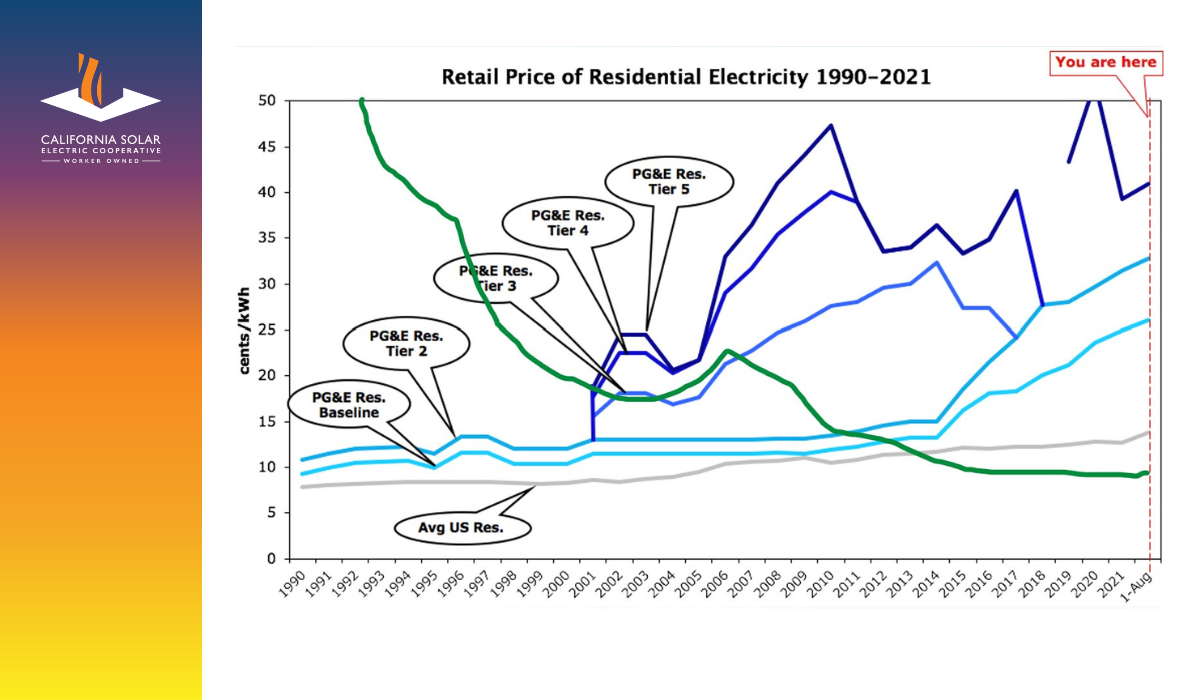
In the early 2000’s, something remarkable happened in Northern California. The cost of utility electricity, particularly from PG&E, continued to rise while the cost of installing solar steadily fell. Eventually, those two lines crossed. For the first time, generating your own electricity with solar became less expensive than buying it from the utility.
While much of the country still faced high solar installation costs and relatively inexpensive electricity, California was different. Demand for solar grew rapidly, installers purchased equipment in larger volumes, manufacturers competed for business, and installation practices became more efficient. These economies of scale helped drive prices down year after year. At the same time, PG&E rates continued climbing, making solar an increasingly attractive investment.
Making Solar Affordable for More Families
Many solar companies focused on selling large systems designed to eliminate a customer's electric bill entirely. We took a different approach. Rather than insisting every customer install the largest possible system, we often recommended smaller, more affordable systems that offset the most expensive portion of their electric usage.
At the time, PG&E used a tiered billing structure. The highest usage tiers carried significantly higher rates, while lower tiers remained relatively inexpensive. By designing systems that eliminated electricity purchased at those expensive upper tiers, homeowners achieved faster payback periods while keeping their upfront investment manageable. Many customers later expanded their systems as their energy needs grew. This approach helped thousands of homeowners start saving sooner while giving them the flexibility to grow their systems over time.
Northern California Became a Solar Leader
As more homeowners adopted solar, our region quickly became one of California's strongest solar markets. Our community earned national recognition as one of the country's leading solar regions. It demonstrated how local investment, experienced installers, and competitive pricing could transform an entire area. It wasn't just about installing solar panels. It was about creating a cleaner, more resilient energy future together.
Success Created a New Challenge: The Duck Curve
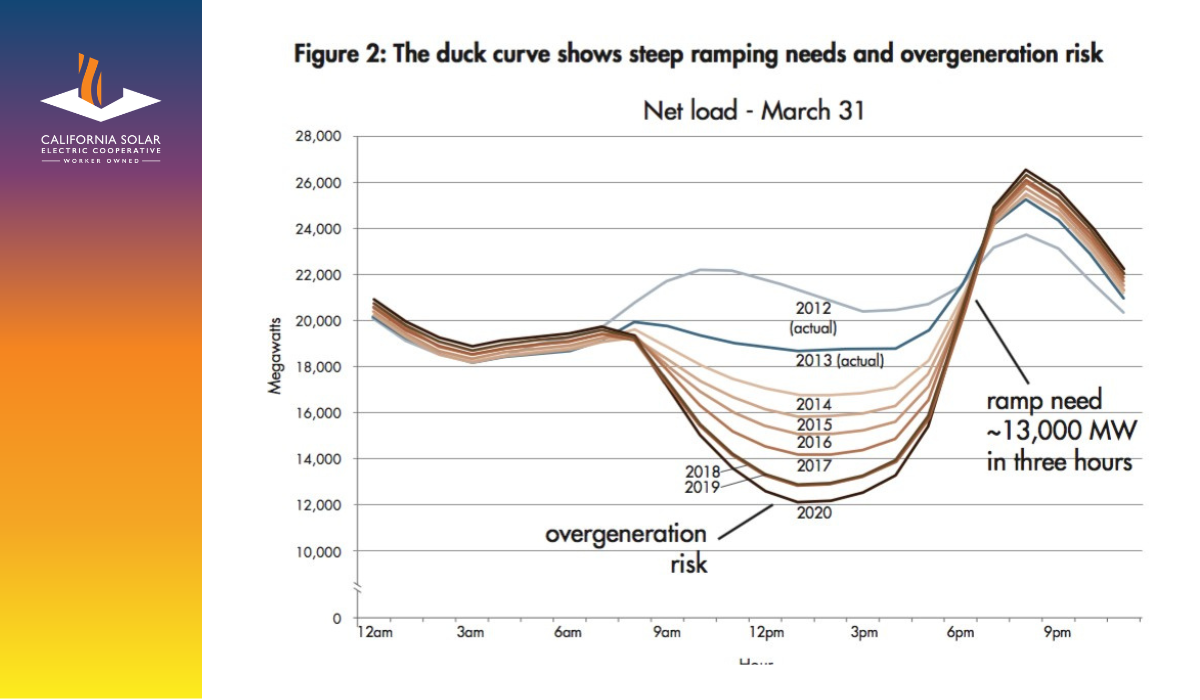
As California added more and more solar generation, the state's power grid began to change. During sunny afternoons, solar produced so much electricity that demand on the traditional power grid dropped dramatically. Then sunset arrived. As millions of solar systems stopped producing power and people returned home, turned on lights, cooked dinner, and ran appliances, electricity demand surged over just a few hours.
When graphed, this daily pattern resembles the outline of a duck, earning the nickname the "Duck Curve." The challenge wasn't that solar produced too much energy. The challenge was when it produced it. California needed more electricity in the evening, not in the middle of the day.
The Shift to Time-of-Use Rates and NEM 2
To encourage electricity use when the grid needed it most, California changed how electricity was priced. Peak pricing shifted from midday to the evening hours. This meant the excess solar energy homeowners sent to the grid during the day became less valuable, while electricity purchased after sunset became more expensive. Although solar continued to save money, homeowners often saw higher remaining utility bills than they had under earlier net metering programs. It became clear that the next phase of solar would require a different solution.
Batteries Changed Everything
The answer wasn't simply adding more solar panels. It was storing the energy your system produced during the day. Back Up Battery systems allow homeowners to use their own solar energy after sunset instead of purchasing expensive electricity from the utility during evening peak hours. This shift led to California's newest net metering program, NEM 3.0, which took effect in 2023.
Under NEM 3.0, exporting excess daytime electricity to the grid is worth much less than it once was. Homeowners now receive the greatest value by storing solar energy in batteries and using it when electricity costs the most. Today's systems are designed to power the home first, charge the battery second, and send only excess electricity back to the grid when it provides the greatest benefit.
Smarter Homes, Smarter Energy
Years before NEM 3.0 was introduced, energy planners predicted that homes equipped with solar and batteries would become active participants in stabilizing California's electric grid. That prediction is becoming reality. Modern energy systems can keep a home's utility meter nearly motionless throughout much of the day. Solar powers the home while the sun shines. Batteries take over after sunset. The grid becomes a backup resource instead of the primary source of electricity. Across California, this same concept is happening on a much larger scale. Solar supplies much of the state's daytime electricity, while battery storage increasingly supports the grid through the evening. Want to learn more? Check out our recent blog “Why A Solar Powered System is still one of the smartest investments you can make”
The Future of Solar Is Here
The solar industry has changed dramatically over the past two decades. We've seen utility rates rise, incentive programs come and go, net metering evolve, and battery technology become an essential part of modern energy systems.
Through every change, our mission has stayed the same. Help homeowners reduce their dependence on rising utility costs while producing clean, reliable energy. Today, we're doing much more than installing solar panels. We're expanding existing systems, adding battery storage, upgrading older technology, helping homeowners prepare for electric vehicles, and ensuring customers continue getting the most from the systems they've already invested in.
The future of solar isn't just about producing electricity. It's about using it more intelligently. Whether you're considering your first solar installation, looking to add battery backup, or upgrading a system you've had for years, we're here to help.
Proudly serving communities across Northern California and beyond, we’re here to help you with all your renewable energy needs. Our service areas include Grass Valley, CA, Auburn, CA, Loomis, CA, Granite Bay, CA, Lincoln, CA, Rocklin, CA, Roseville, CA, Cameron Park, CA, Diamond Springs, CA, Placerville, CA, Pollock Pines, CA, El Dorado Hills, CA, Truckee, CA, Tahoe City, CA, and South Lake Tahoe, CA. Contact us today to learn more about our residential solar solutions, such as a solar powered system, backup batteries/battery storage, smart energy management, home standby generators, electrical vehicle chargers, and solar system servicing (system check & repair) available in your community.